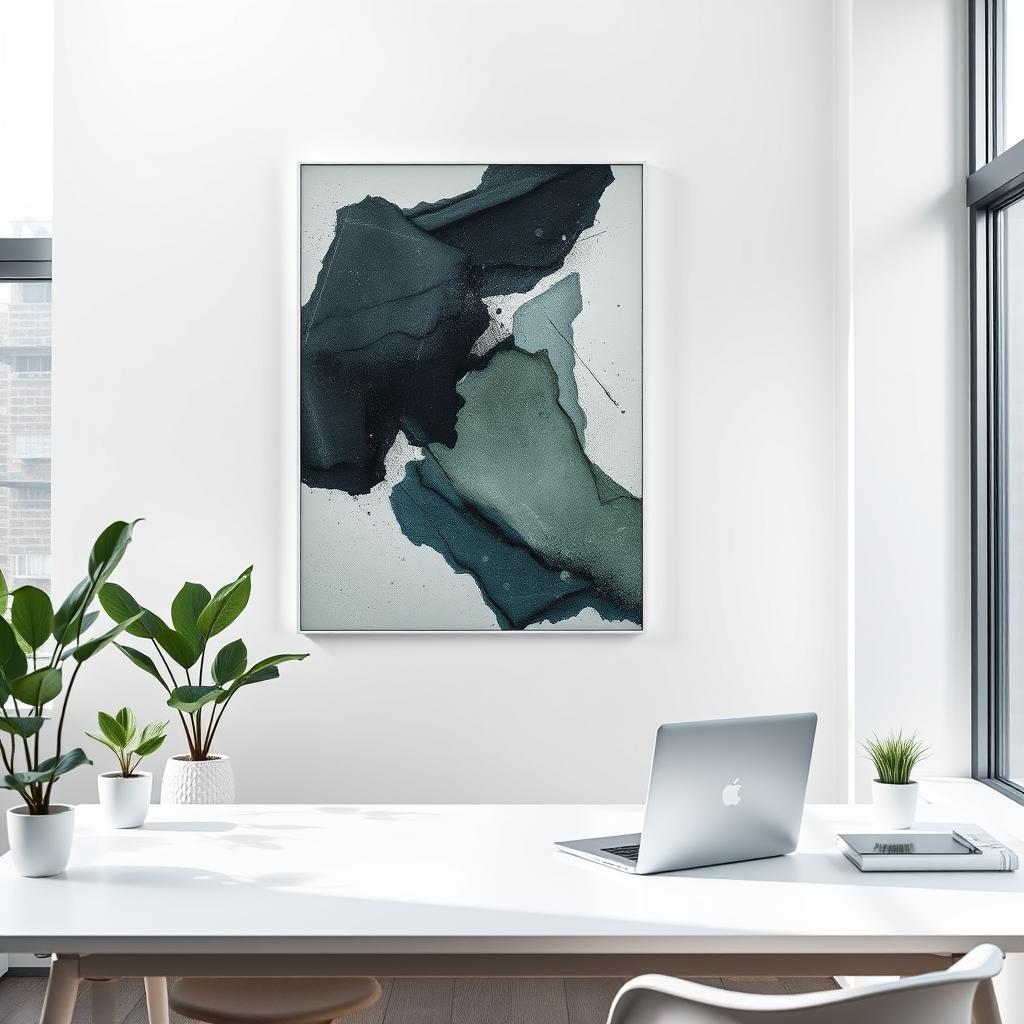
Art and productivity: what science says about choosing the right artwork size
In a world where productivity has become a major concern, we’re constantly looking for ways to perform better. What if the answer were hanging on our walls? Science is now revealing art’s surprising impact on how effectively we work.
Recent studies show that our visual environment directly affects our ability to concentrate, our creativity, and our overall wellbeing. So then, quelle taille de tableau choisir how do you maximize these benefits? Let’s explore what scientific research teaches us.
The scientifically proven impact of art on productivity
Neuroscience tells us that our brains constantly process visual information, even unconsciously. A study conducted by the University of Exeter found that employees working in spaces decorated with art were 15% more productive than those working in neutral environments.
This improvement can be explained by several neurobiological mechanisms. Art stimulates dopamine production, a neurotransmitter linked to pleasure and motivation. It also lowers cortisol levels, the stress hormone, creating a mental environment more conducive to focus.
Color plays a particularly important role. The warm tones in our Golden Hour collection encourage energy and creativity, while the calming shades of Botanica help reduce anxiety and improve focus.
How to determine what size artwork to choose for your space
The size of your artwork isn’t a minor detail. Research in environmental psychology has established clear links between the size of decorative elements and their effects on cognition.
For a personal office, the scientific rule of thumb suggests a piece should cover between 15 and 25% of the visible wall surface. This proportion maximizes visual impact without causing cognitive overload. In practice, for a 3-meter-wide wall, go for pieces sized between 50 and 70 cm.
In collaborative spaces, quelle taille de tableau choisir sizing becomes more strategic. Large rooms benefit from bold, oversized pieces (80–100 cm) that create structuring focal points. Our Abstract Lab pieces are perfectly suited to these ambitious layouts.
Art as a creativity catalyst: what size works best
Creativity requires a delicate balance between stimulation and calm. Studies conducted at MIT show that medium-sized pieces (40–60 cm) strike this balance best in creative spaces.
This size allows for active contemplation without hogging all the attention. It lets the mind wander — an essential process for new ideas to emerge. Organic patterns and fluid shapes amplify this effect, which is why our Aquarella posters are so popular with creative professionals.
For brainstorming and collaborative sessions, consider several medium-sized pieces rather than one large one. This approach multiplies your sources of inspiration without creating major visual distraction.
Optimizing lighting: the science behind choosing the right artwork size
The interplay between art and light profoundly affects our perception and cognitive performance. Research in visual ergonomics shows that artwork size should be adapted to the available lighting.
In abundant natural light, large pieces (70–100 cm) reveal their full splendor and keep their impact throughout the day. Our Luminis collection takes advantage of this light synergy to create energizing atmospheres.
Under artificial lighting, medium sizes (30–50 cm) prove more effective. They catch directional light better and avoid the shadowy patches that can hurt a piece’s visibility.
Minimalist art and focus: sizing for performance
The minimalist movement has roots in cognitive science. Uncluttered environments reduce mental load and improve focus by 23%, according to a Harvard study.
With that in mind, quelle taille de tableau choisir what works best for a minimalist space? Research points to single, large-scale pieces (80–120 cm) with clean lines. This approach creates maximum impact with minimal elements.
Our posters Mono Noir perfectly illustrate this philosophy. Their clean compositions and generous dimensions transform the workspace into a sanctuary of productivity.
Sizing art to match the function of your space
Every work zone deserves its own approach. Behavioral neuroscience teaches us that our brains unconsciously associate certain visual configurations with particular modes of functioning.
For reflective spaces, opt for contemplative, square-format pieces (50×50 cm). This shape encourages introspection and structured thinking. Abstract compositions in earthy tones from Terre Nomade are a great fit here.
Presentation areas call for horizontal rectangular pieces (70×50 cm minimum) that naturally guide the eye and support visual communication. Wall art then becomes an ally to your eloquence.
Color psychology and optimal sizing
Research in color psychology reveals fascinating interactions with size. Energizing hues (red, orange, yellow) become more effective on larger surfaces, amplifying their stimulating effect.
Conversely, calming colors (blue, green, purple) keep their relaxing power even in smaller formats. This finding is revolutionizing how we approach artistic sizing in the workplace.
The urban compositions in our Urbana range use these principles to create dynamic atmospheres perfectly calibrated to their size.
Science now guides our decorating choices. Quelle taille de tableau choisir is no longer a matter of personal taste but a decision informed by research. Inkora’s premium wall art turns your workspace into a high-performance environment, where beauty and efficiency work in harmony.
Discover our selection ofwall art pieces scientifically optimized for your productivity. Your desk deserves the best — and so does your performance.
 FR
FR EN
EN